The Asia Flag Planting Playbook
Jurisdiction comparison matrix, banking setup checklist, and the exact structure 6-figure earners are using in 2026.
Get Access →
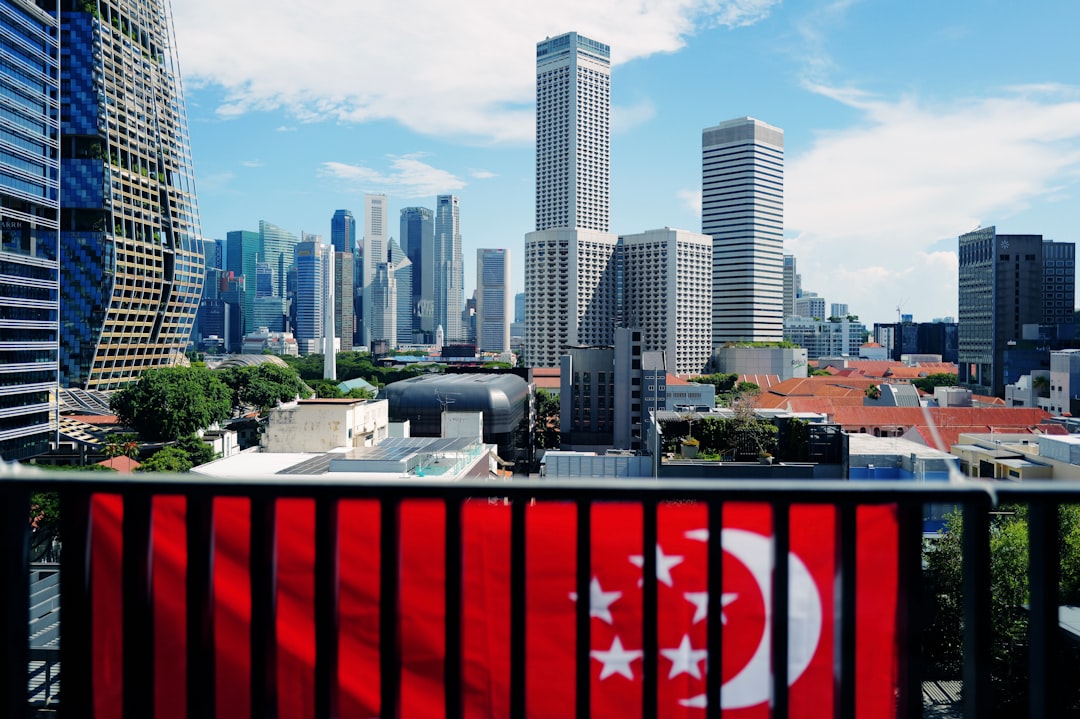
Singapore Tax Residency: The Complete Guide for Operators and Expats
Singapore tax residency is one of the most searched topics among digital operators, remote founders, and high-income expats — and for good reason. The city-state has built a global reputation as a premier banking hub, a clean regulatory environment, and a low-tax jurisdiction that actually works. But does the banking reputation translate into a clean win on the tax residency side? Not always. The rules are strict, the cost of living is real, and the path to legitimate residency requires more than just opening a bank account. This guide breaks down exactly what Singapore tax residency means, how to qualify, what it costs, and where the tradeoffs live.
What Singapore Tax Residency Actually Means
Tax residency in Singapore is determined by the Inland Revenue Authority of Singapore (IRAS). You are considered a tax resident if you are:
- A Singapore Citizen or Permanent Resident living in Singapore, or
- A foreigner who has worked or lived in Singapore for 183 days or more in a calendar year
The 183-day rule is the primary threshold for foreigners. This is not unusual — most jurisdictions use a version of it — but Singapore applies it on a calendar-year basis, not a rolling 12-month basis. That distinction matters for planning entry timing.
What changes when you become a tax resident?
- You are taxed on income earned in Singapore only (territorial tax system)
- Foreign-sourced income remitted to Singapore is generally exempt (with narrow exceptions for partnerships and controlled entities)
- You access Singapore's progressive tax rates, which top out at 24% for income above SGD 1,000,000 — low by OECD standards
- You can qualify for various personal reliefs and deductions not available to non-residents
Non-residents, by contrast, are taxed at a flat rate of 15% on employment income or at the resident rate — whichever yields more tax. For most non-residents, that means no access to reliefs and a higher effective rate.

The 183-Day Rule: How It Works in Practice
The 183-day threshold is the mechanical core of Singapore tax residency for expats. But the execution is more nuanced than simply counting calendar days.
What counts as a day in Singapore?
IRAS counts a day if you are physically present in Singapore at any point during that day — including arrival and departure days. Business trips, personal travel, and transit days can all count, depending on context.
Temporary absences
This is where Singapore's approach becomes more operator-friendly than many competing jurisdictions. If you are a Singapore tax resident in a prior year and you have temporary absences from Singapore for work-related reasons — even extended ones — those absences may not break your residency status. IRAS can treat these days as Singapore-present days if the absence is directly connected to your Singapore employment.
This is a meaningful provision. A consultant based in Singapore who spends 60 days per year traveling for client work can still maintain residency. Compare this to tax residency Thailand, where the 180-day rule has no equivalent work-travel exemption and is applied more strictly for foreigners.
Calendar year, not tax year
Singapore's income tax year runs from January 1 to December 31. If you arrive mid-year and don't hit 183 days in Year 1, you may still qualify as a resident if IRAS chooses to treat you as one based on your intention to remain (employment pass holders are often granted this). But this is discretionary, not guaranteed.
How to Establish Singapore Tax Residency as a Foreign National
There are several legally recognized paths to establishing Singapore tax residency as a foreigner.
Employment Pass (EP)
The most common route for professionals and founders. If you hold a valid Employment Pass and are based in Singapore for your work, IRAS will typically treat you as a tax resident from the start of your employment — even if you don't hit 183 days in your first calendar year.
EP holders who leave employment and exit Singapore within the year may have their status reviewed. IRAS can re-assess and reclassify you as a non-resident for that year.
EntrePass
Designed for startup founders and entrepreneurs. EntrePass holders are treated similarly to EP holders for tax purposes. The challenge is that qualifying for EntrePass requires demonstrating innovative business activity — it is not a passive residency route.
Personalised Employment Pass (PEP)
For high-earning professionals (minimum fixed monthly salary of SGD 22,500 at the time of application). PEP holders can remain in Singapore for up to six months between jobs without losing their pass, which provides more flexibility for tax residency continuity.
Long-Term Visit Pass (LTVP) and Dependent's Pass
These passes do not confer the right to work, but physically residing in Singapore on these passes still counts toward the 183-day threshold. If you have passive income structures and don't need an employment pass, physical presence alone can establish residency.
Permanent Residency (PR) and Citizenship
The most stable path. PRs and citizens are automatically Singapore tax residents as long as they are "ordinarily resident" in Singapore — there is no annual day-count requirement. The PR application process typically requires two or more years of continuous EP residency and is selective.
Singapore's Territorial Tax System: The Real Advantage
Singapore's territorial tax model is the core reason operators pay attention to it. Unlike the US (which taxes citizens on worldwide income regardless of where they live), Singapore taxes residents on:
- Income sourced in Singapore, and
- Foreign-sourced income remitted to Singapore — but only in specific circumstances
The foreign-sourced income exemption means that income earned outside Singapore and kept offshore is generally not taxed in Singapore. For a founder running a Singapore-incorporated company that earns revenue internationally, the structure can be highly efficient — though IRAS scrutinizes the substance of operations carefully.
The substance requirement is real. IRAS and Singapore's transfer pricing rules require that the economic activity generating the income actually occurs in Singapore for the tax treatment to hold. Shelf companies with no real Singapore operations are not a workaround.
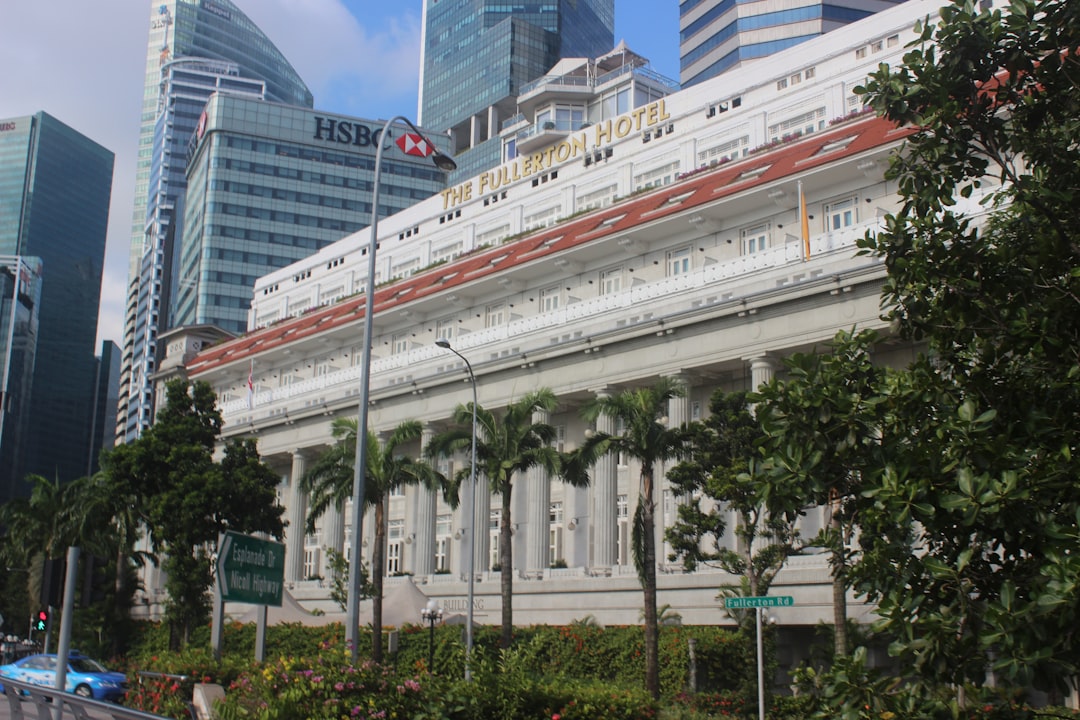
This is where Singapore's reputation as a banking hub creates a misleading heuristic. Yes, opening a corporate account at DBS, OCBC, or UOB is straightforward relative to most jurisdictions. And yes, the banking infrastructure is excellent. But banking presence ≠ tax residency, and tax residency alone does not make your offshore income tax-exempt. The substance of your operation has to sit in Singapore to access the full efficiency of the structure.
Singapore Tax Rates for Residents vs. Non-Residents
Understanding the rate differential is important for planning.
Resident tax rates (2024 assessment year onward):
| Chargeable Income (SGD) | Tax Rate |
|---|---|
| First 20,000 | 0% |
| 20,001 – 30,000 | 2% |
| 30,001 – 40,000 | 3.5% |
| 40,001 – 80,000 | 7% |
| 80,001 – 120,000 | 11.5% |
| 120,001 – 160,000 | 15% |
| 160,001 – 200,000 | 18% |
| 200,001 – 240,000 | 19% |
| 240,001 – 280,000 | 19.5% |
| 280,001 – 320,000 | 20% |
| Above 320,000 | 22% |
| Above 1,000,000 | 24% |
There is no capital gains tax in Singapore. There is no inheritance tax. GST (goods and services tax) applies at 9% (as of 2024) to consumption but does not affect income tax planning directly.
Non-resident rate: 15% flat on employment income, or resident rates — whichever is higher. No access to reliefs.
For a foreign professional earning SGD 200,000 per year, the difference between resident and non-resident treatment can be SGD 15,000–25,000 annually, depending on applicable reliefs.
Comparing Singapore to Regional Alternatives
Tax residency planning in Southeast Asia increasingly comes down to Singapore versus its neighbors, particularly Thailand and Malaysia.
Singapore vs. Thailand
Thailand's territorial tax system has historically been more permissive — foreign income remitted after 12 months was not taxed. However, Thailand revised this rule in 2024, now taxing all foreign-sourced income remitted to Thailand regardless of when it was earned. Singapore's exemption for offshore income that is never remitted remains intact and structurally cleaner.
On cost: Singapore is significantly more expensive. Monthly rent for a modest apartment in central Singapore runs SGD 3,500–6,000. Bangkok is roughly 40–60% cheaper for comparable quality. For a digital nomad optimizing on cost-per-tax-efficiency, Thailand still has arguments — but Singapore wins on rule of law, banking stability, and long-term regulatory predictability.
Singapore vs. Malaysia
Malaysia's MM2H (Malaysia My Second Home) program offers a residency route with a relatively low capital requirement compared to Singapore PR. Malaysian income tax rates are comparable to Singapore for mid-range incomes. However, Malaysia does not have Singapore's institutional infrastructure, and its foreign-sourced income exemption has been under revision — as of 2024, foreign-sourced income is now taxable for Malaysian residents in many cases.
For operators running serious digital businesses, Singapore remains the structural benchmark in the region.
The Real Costs of Singapore Tax Residency
Here is where the honest tradeoff lives. Singapore's tax efficiency is real — but it is not free.
Cost of living
Singapore is one of the most expensive cities in the world. Monthly costs for a single professional (excluding rent) run SGD 2,500–4,000. With rent, budget SGD 6,000–10,000/month for a comfortable lifestyle. For a founder who has been operating from Chiang Mai at SGD 1,500/month all-in, the arithmetic needs to work.
CPF (Central Provident Fund)
If you become a PR, CPF contributions are mandatory — both from employee and employer. CPF rates for PRs in the first two years are reduced, but they increase to full rates (up to 37% of wages combined, split between employer and employee) over time. This is not a tax in the traditional sense, but it does affect liquidity.
Corporate compliance
Singapore companies are required to maintain a local director, file annual returns with ACRA, and maintain proper accounts. A basic corporate secretary + accounting package runs SGD 2,000–5,000/year for a simple structure. Not expensive, but not zero.
The substance requirement revisited
If you are using a Singapore entity for international business, IRAS expects genuine economic activity in Singapore. This means real employees, real office space (or at least a credible co-working arrangement), and documented decision-making occurring locally. Building that substance costs money — and IRAS has become more active in scrutinizing nominee director arrangements and shell structures.
Steps to Establish Singapore Tax Residency
If you have assessed the tradeoffs and Singapore is the right move, here is the operational sequence:
-
Secure the right visa — Employment Pass for employed professionals, EntrePass for startup founders, or an investor visa route if applicable. Determine your path before moving.
-
Track your days — Use a simple spreadsheet or a tool like TaxBird or Taxnomad. Start from day one. Keep copies of travel records, boarding passes, and hotel receipts.
-
Notify your home country's tax authority — Filing a departure return (or equivalent) in your home country is often required to formally exit tax residency there. This step is frequently missed and creates dual-residency exposure.
-
File your first Singapore income tax return — IRAS will send you a Notice of Assessment. If you don't receive one and you have taxable income, you are still required to file. The filing deadline is April 15 of the following year for manual filing, April 18 for e-filing.
-
Establish banking and financial substance — Open personal and corporate accounts at Singapore banks. Ensure your income flows are structured correctly before remitting offshore income to Singapore accounts.
-
Document your economic substance — Keep contracts, meeting minutes, email records, and other evidence that business decisions are being made in Singapore. This is especially important if you are claiming that income is Singapore-sourced.
FAQ
Does Singapore tax foreign income?
For Singapore tax residents, foreign-sourced income remitted to Singapore may be taxed — but Singapore grants exemptions for most categories of foreign income if the income has already been subject to tax in the source country at a rate of at least 15%, or if the foreign jurisdiction has a headline tax rate of at least 15%. In practice, most foreign income earned by residents of Singapore and kept offshore is not taxed. Income that has never been remitted to Singapore is generally outside IRAS's reach entirely.
Can a digital nomad establish Singapore tax residency?
Yes, but it requires physical presence of 183+ days in a calendar year and a valid visa that permits residency. A standard tourist entry does not provide a path to tax residency. Digital nomads who split time across multiple countries and visit Singapore briefly will not qualify. If Singapore is your base — meaning you actually live and work there for the majority of the year — the tax residency rules are workable.
How does Singapore tax residency interact with my home country's tax rules?
This depends entirely on your home country. US citizens, for example, cannot escape US tax obligations by establishing Singapore tax residency — the US taxes citizens on worldwide income regardless of residence. Most European and Commonwealth citizens, however, can exit their home country's tax net by establishing bona fide residency elsewhere. Check whether your home country has a tax treaty with Singapore — Singapore has an extensive treaty network covering over 90 countries, which can reduce withholding taxes on cross-border income.
What is the minimum income to make Singapore tax residency worthwhile?
There is no official threshold, but the practical break-even point depends on your cost of living delta and your effective tax rate at home. For a professional earning SGD 150,000+ per year in Singapore, the combination of low rates and no capital gains tax is materially advantageous compared to most Western jurisdictions. Below that income level, the cost-of-living premium of Singapore often offsets the tax savings — especially when compared to alternatives like Thailand's LTR visa or Malaysia's MM2H.
How do I stop being a Singapore tax resident?
If you leave Singapore and cease employment or residency, IRAS will reassess your status for the year of departure. You will need to file a tax clearance (IR21) if you are a foreigner leaving permanently or for an extended period. Your employer is legally required to withhold final salary pending IRAS clearance. Ensure all tax obligations are settled before exiting — unresolved balances can create complications for future banking and visa applications in Singapore and elsewhere.